Construction projects often involve working at different heights and accessing areas that are difficult to reach from the ground. On sites with multiple floors, curved structures or limited working space, contractors need a scaffolding system that supports their work requirements and allows them to plan access properly. Ringlock scaffolding offers a modular arrangement that helps construction teams create working platforms for different site layouts. Its connected components allow contractors to plan scaffolding according to the structure and the work involved.
What Is Ringlock Scaffolding?
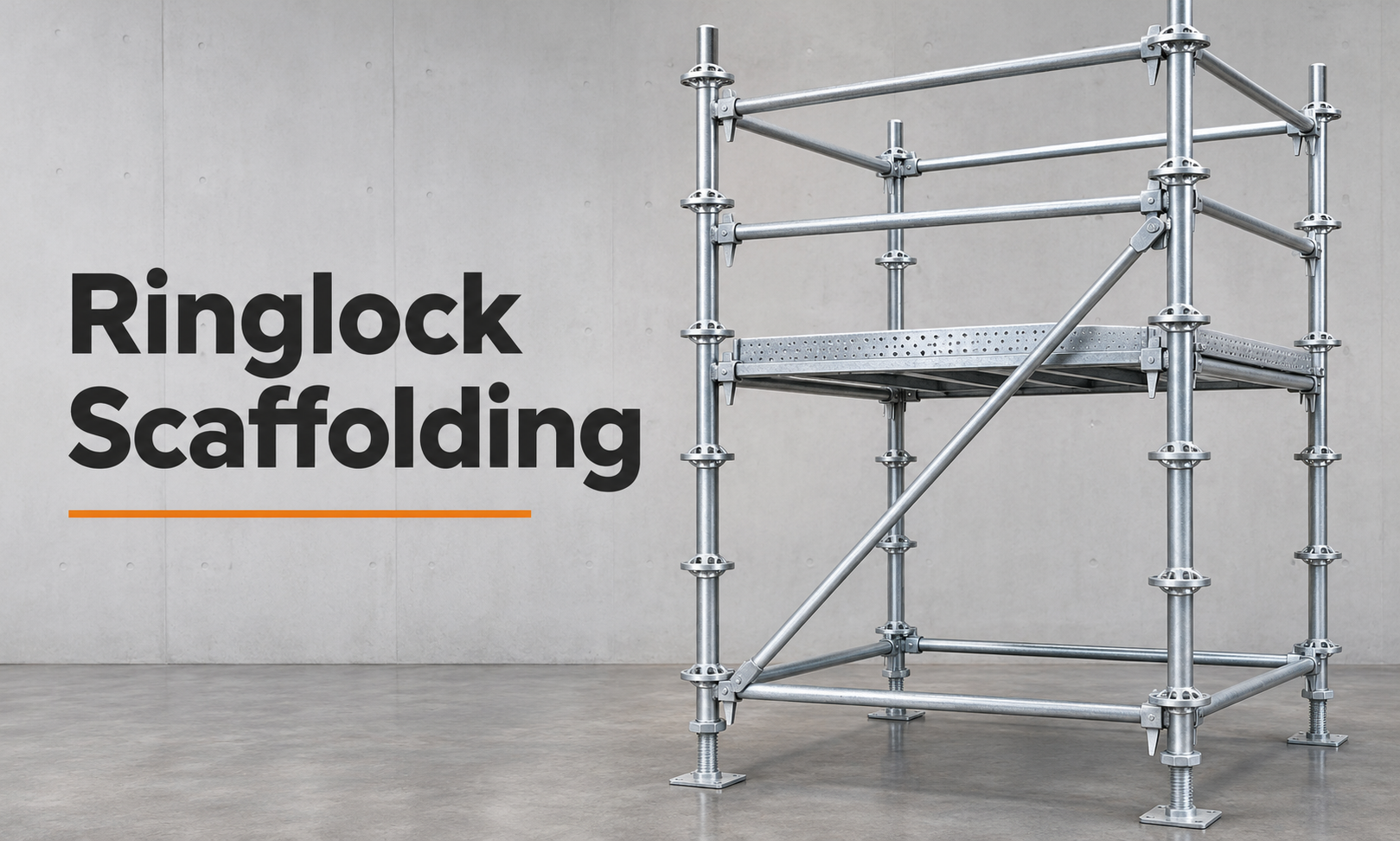
Ringlock scaffolding is a modular scaffolding system that uses circular connection points called rosettes on vertical standards. Workers connect horizontal ledgers and diagonal braces to these points using wedge connections. This arrangement allows multiple components to connect at a single point and supports different scaffolding configurations.
Unlike traditional tube-and-coupler scaffolding that uses separate couplers for many connections, ringlock scaffolding uses designed connection points. This can help organise assembly when workers follow the correct installation procedure and use compatible components.
How Does Ringlock Scaffolding Work?
The system uses vertical standards as the main supporting structure. Horizontal ledgers connect these standards while diagonal braces help maintain stability according to the approved design. Working platforms and access components provide space for workers to perform construction and maintenance activities.
For example, a contractor working on a multi-storey commercial building may need access to different facade sections for plastering and painting. A properly planned ringlock arrangement can provide access across the required working levels while allowing the scaffolding team to organise bays according to the building layout.
Main Components of Ringlock Scaffolding
Understanding the components helps contractors plan their scaffolding requirements more effectively.
- Vertical standards: Form the upright framework and contain rosette connection points.
- Horizontal ledgers: Connect standards and define the scaffolding bays.
- Diagonal braces: Help provide stability according to the scaffold design.
- Base jacks: Support and adjust the scaffold base where the approved arrangement permits.
- Working platforms: Provide surfaces for construction and maintenance work.
- Access components: Help workers move safely between different working levels.
Each component must match the selected system and the project requirements. Contractors should confirm the required quantities and specifications before ordering.
Benefits of Modular Ringlock Scaffolding
Modular Panel Formwork offers flexibility for projects where access requirements change across different sections of a structure. Its connection arrangement allows contractors to plan different configurations according to the approved layout.
The system can support organised assembly when workers use compatible components and follow the required installation sequence. Its modular design may also help contractors manage components across projects when the parts remain in suitable condition and pass the required inspections.
Another advantage is its suitability for different applications. Contractors may consider ringlock scaffolding for building construction, bridge work, industrial maintenance and other projects that require temporary access at height.
Applications of Ringlock Scaffolding
Ringlock scaffolding is used across different construction and industrial sectors depending on the site conditions and design requirements.
Building Construction
Contractors may use scaffolding for masonry, plastering, painting, facade work and other activities that require access to elevated sections of buildings.
Infrastructure Projects
Bridge construction, flyovers and metro projects may require temporary access around complex structures. Ringlock scaffolding can support planned access arrangements for these applications when the design permits.
Industrial Maintenance
Factories and industrial facilities often need access for inspection, repair and maintenance work. Contractors can plan scaffolding around equipment and working areas according to site conditions.
Commercial Buildings
Commercial projects may require scaffolding for facade installation, finishing and maintenance across multiple floors.
Ringlock Scaffolding vs Other Scaffolding Systems
Contractors often compare ringlock scaffolding with other systems before selecting a suitable option. The choice depends on project dimensions, access requirements, component availability, working loads and site conditions.
Ringlock scaffolding uses rosette connection points and wedge connections. Cuplock scaffolding uses cup-and-blade connections. Both are modular systems but their components and connection arrangements differ.
The best system for a project depends on its requirements rather than the product name alone. Contractors should review the scaffold layout, required components, installation method and project specifications before making a decision.
What Should You Check Before Choosing Ringlock Scaffolding?
Selecting scaffolding requires more than comparing prices. Construction companies should consider the following before placing an order:
- Project height and structure layout
- Required working platform dimensions
- Component compatibility
- Material specifications and product quality
- Required quantities
- Access and installation requirements
- Transport and storage arrangements
- Supplier support and product availability
Preparing a component list based on the project layout can help avoid shortages and unnecessary purchases during installation.
Safety Considerations for Construction Scaffolding
A scaffolding system requires proper planning, installation, inspection and use. Contractors should ensure that the scaffold matches the approved design and site conditions before workers use it.
Important safety measures include checking components before assembly, using suitable base support, installing platforms and access components correctly, providing required guardrails, securing the scaffold according to the design and preventing unauthorised changes.
Workers should receive appropriate training and supervision. The scaffold's dimensions, load requirements, bracing, tie arrangements and installation details must be confirmed by the competent person or qualified scaffolding designer responsible for the project.
Choosing a Reliable Ringlock Scaffolding Manufacturer
A reliable manufacturer can help construction companies understand product specifications and plan procurement according to their project needs. Buyers should review component compatibility, manufacturing quality, product range and the manufacturer's ability to discuss technical requirements clearly.
Bajaj Products caters to construction contractors, infrastructure developers, building companies and industrial businesses looking for scaffolding and construction support products. Buyers can share project details, required quantities and specifications to discuss suitable product options for their intended application.
Whether you are planning a building project, industrial maintenance work or infrastructure development, selecting the right scaffolding system begins with understanding your site's requirements.
Frequently Asked Questions
What is ringlock scaffolding used for?
Ringlock scaffolding is used for temporary access and working platforms in construction, infrastructure, industrial maintenance and other applications that require work at height.
What are the main components of ringlock scaffolding?
The main components include vertical standards, horizontal ledgers, diagonal braces, base jacks, working platforms and access components.
Is ringlock scaffolding suitable for building projects?
It can suit residential, commercial and infrastructure projects when contractors select the correct configuration according to the building layout, working loads and site conditions.
How do I choose a ringlock scaffolding manufacturer?
Review the manufacturer's product range, component specifications, quality processes, compatibility and ability to understand your project requirements before placing an order.
Conclusion
Ringlock scaffolding offers a modular approach to creating temporary access and working platforms for construction and industrial projects. Its connection arrangement and adaptable configuration make it useful for different structures and access requirements.
However, the right system depends on the project layout, working loads, site conditions, components and safety requirements. Contractors should review these factors before purchasing or installing scaffolding.
If you are planning a construction or infrastructure project and need scaffolding components for your requirements, Bajaj Products can help you discuss suitable product options. Share your project details to explore your scaffolding requirements and request a quotation.